
2026 Range Rover: About Suspension and Steering Systems
The Range Rover incorporates advanced suspension and steering systems designed to manage vehicle dynamics across on-road and off-road conditions. These systems combine mechanical components with electronic control technologies to optimize ride comfort, stability, articulation, and steering precision. The integration of adaptive air suspension and electronically assisted steering enables continuous adjustment based on terrain, speed, and driver input.
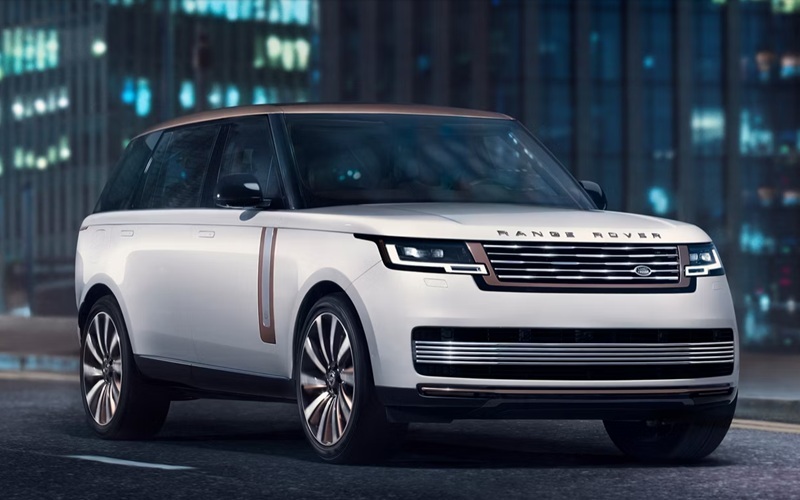
The Range Rover Suspension System
The suspension system is designed to maintain wheel contact with the ground, absorb road irregularities, and support vehicle weight under varying load conditions.
Independent Multi-Link Suspension
Both front and rear axles use independent multi-link suspension configurations.
Components
Upper and lower control arms
Longitudinal and lateral links
Subframe assemblies
Wheel carriers
Functionality
Each wheel is allowed to move independently, improving ride comfort and traction. Multiple links control wheel geometry, allowing precise tuning of camber, toe, and caster angles throughout suspension travel.
Engineering Benefits
Improved articulation for off-road conditions
Enhanced stability during cornering
Reduced transmission of road vibrations
Electronic Air Suspension System
Air Spring Mechanism
The system replaces traditional coil springs with air springs.
Components
Air struts
Air compressor
Air reservoir
Valve block
Height sensors
Operation
Air pressure within the air springs is adjusted to control ride height and stiffness.
Ride Height Adjustment
Increased height for off-road clearance
Reduced height for aerodynamic efficiency at higher speeds
Typical ride height adjustments can vary by several tens of millimetres depending on mode and conditions.
Load-Leveling Function
The system automatically maintains a consistent ride height regardless of passenger or cargo load.
Range Rover Adaptive Damping System
Electronically Controlled Dampers
Dampers adjust their resistance in real time based on driving conditions.
Inputs
Vehicle speed
Steering input
Suspension movement
Road conditions
Functionality
Softer damping for comfort on uneven surfaces
Firmer damping for improved handling during dynamic driving
Active Anti-Roll Control
Electronic Roll Stabilization
The system reduces body roll during cornering.
Components
Active anti-roll bars
Electric actuators
Operation
The system applies torque to the anti-roll bars to counteract lateral forces.
Benefits
Improved cornering stability
Reduced body lean
Enhanced passenger comfort
Terrain Response Integration
Terrain-Adaptive Suspension Control
The suspension system is integrated with terrain management software.
Modes
On-road driving
Mud and ruts
Sand
Rock crawling
Functionality
Each mode adjusts:
Ride height
Damping characteristics
Traction control parameters
The Range Rover Steering System
Electric Power Steering (EPS)
The Range Rover uses an electric power steering system.
Components
Electric motor
Steering rack
Torque sensor
Steering control module
Operation
The torque sensor detects driver input, and the control module determines the required level of assistance.
Variable Assistance
High assistance at low speeds for easier maneuvering
Reduced assistance at higher speeds for stability
Rack-and-Pinion Steering Mechanism
Mechanical Layout
Steering wheel connected to a pinion gear
Pinion engages a linear steering rack
Rack movement turns the wheels via tie rods
All-Wheel Steering System
Rear-Wheel Steering Function
Certain configurations include rear-wheel steering.
Operation
Rear wheels turn in the opposite direction to the front wheels at low speeds
Rear wheels turn in the same direction at higher speeds
Benefits
Reduced turning radius
Improved high-speed stability
Enhanced maneuverability
Steering Integration with Driver Assistance Systems
Range Rover Lane Keeping and Stability Systems
Steering is integrated with advanced driver assistance systems.
Functions
Lane keeping assist
Collision avoidance steering input
Sensor Inputs
Cameras
Radar systems
Steering angle sensors
Suspension Geometry and Alignment
Key Parameters
Camber angle
Caster angle
Toe angle
Dynamic Adjustment
The system maintains optimal geometry during suspension travel to ensure tire contact and stability.
Off-Road Performance Considerations
Wheel Articulation
Independent suspension allows each wheel to move vertically to maintain traction on uneven terrain.
Ground Clearance
Air suspension increases clearance for obstacle negotiation.
Water Wading Capability
Ride height adjustments support deeper water crossings by raising critical components above the water level.
Noise, Vibration, and Harshness (NVH)
Isolation Techniques
Hydraulic bushings
Subframe isolation mounts
Air suspension damping
Result
Reduced transmission of road noise and vibration into the cabin.
Thermal and Energy Considerations
Energy Consumption
Air compressors and electronic systems consume electrical energy.
Efficiency Measures
Optimized compressor cycles
Adaptive system engagement
Range Rover Safety and Redundancy
Fail-Safe Modes
If electronic systems fail:
Suspension defaults to a safe height
Steering retains mechanical linkage
Monitoring Systems
Sensors continuously monitor system performance and trigger alerts if irregularities occur.
Maintenance and Diagnostics
Suspension System Maintenance
Inspection of air springs and lines
Compressor performance checks
Sensor calibration
Steering System Maintenance
Alignment checks
EPS diagnostics
Inspection of mechanical linkages
System Integration
Centralized Control
The suspension and steering systems are integrated through a central control architecture.
Data Communication
Controller Area Network (CAN)
Real-time data exchange between modules
Performance Characteristics
Ride Comfort
Air suspension and adaptive damping provide consistent ride quality across surfaces.
Handling
Multi-link suspension and active roll control improve cornering dynamics.
Maneuverability
All-wheel steering enhances low-speed turning and high-speed stability.
2026 Range Rover FAQ
What type of suspension does the 2026 Range Rover use?
It uses an electronically controlled air suspension with a fully independent multi-link design on both axles.
How does air suspension adjust ride height?
Air pressure in the air springs is adjusted to raise or lower the vehicle based on driving conditions.
What is the function of all-wheel steering?
All-wheel steering improves maneuverability by adjusting the rear wheel direction based on speed and driving conditions.
How does adaptive damping work?
Electronically controlled dampers adjust resistance in real time based on sensor data to balance comfort and handling.
What happens if the suspension system fails?
The system enters a fail-safe mode that maintains a stable ride height, while steering remains mechanically operational.
*Disclaimer: Content contained in this post is for informational purposes only and may include features and options from US or internacional models. Please contact the dealership for more information or to confirm vehicle, feature availability.*


