
Range Rover Sport Drivetrain Across All Model Generations
The Range Rover Sport has established itself as a benchmark in the luxury SUV segment, combining refined on-road dynamics with exceptional off-road capability. Central to this dual personality is the sophisticated drivetrain technology that has evolved across three generations since its introduction in 2005. Each iteration has brought significant advancements in power delivery, traction control, and off-road capability, reflecting Land Rover’s commitment to engineering excellence and innovation. This comprehensive examination traces the evolution of the Range Rover Sport drivetrain systems from the original L320 through to the latest L461 model, highlighting the technological advancements that have maintained its position at the forefront of luxury performance SUVs.
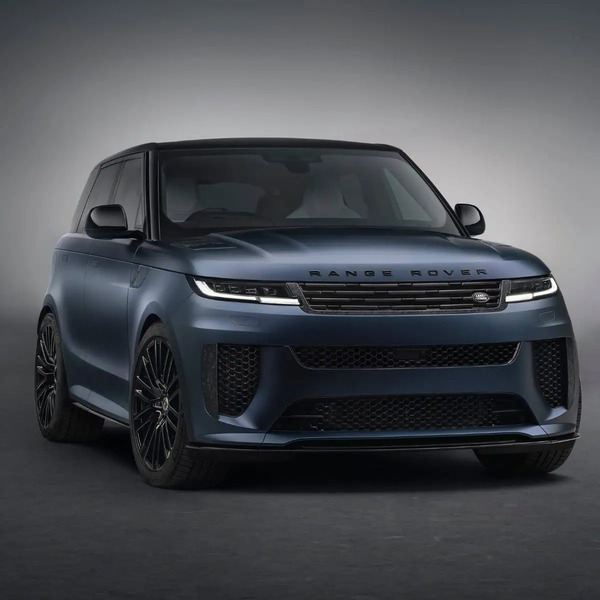
First Generation (L320): 2005-2013
The inaugural Range Rover Sport (L320) marked Land Rover’s entry into the performance SUV market while maintaining the brand’s legendary off-road capabilities. The drivetrain of this first-generation model established the blueprint for future iterations with several innovative features.
Powertrain Options
The L320 launched with two primary engine options: a 4.2-litre supercharged V8 producing 390 horsepower and a naturally aspirated 4.4-litre V8 delivering 300 horsepower. Both engines were paired with a ZF 6-speed automatic transmission that provided smooth shifts and responsive performance.
For the 2010 model year, Land Rover introduced significant powertrain updates. The supercharged engine was upgraded to a more efficient 5.0-litre unit that increased output to 510 horsepower while simultaneously improving fuel economy. The naturally aspirated option was also replaced with a 5.0-litre V8 producing 375 horsepower.
Diesel variants included a 2.7-litre TDV6 that was later upgraded to a more powerful and efficient 3.0-litre TDV6, delivering 29 percent more power and 36 percent more torque than its predecessor, with 9 percent better fuel efficiency. The 2010 model year also saw the introduction of the ZF HP28 six-speed automatic transmission, designed to improve performance by engaging lock-up clutches earlier after selection.
Four-Wheel Drive System
The L320 Range Rover Sport featured a permanent four-wheel drive system with a two-speed transfer case that offered both high and low range gearing. The standard setup included an electronically controlled centre differential that could vary torque distribution between the front and rear axles to optimize traction.
Higher-specification models featured the Dynamic Response system, which employed hydraulically controlled anti-roll bars to reduce body roll during cornering without compromising off-road articulation. This system automatically disconnects off-road to allow maximum wheel travel.
Terrain Response System
The L320 introduced Land Rover’s revolutionary Terrain Response system, a significant innovation that transformed how drivers interact with off-road settings. This patented technology allowed the driver to select from five terrain modes:
General Driving
Grass/Gravel/Snow
Mud and Ruts
Sand
Rock Crawl
Each mode automatically optimized various vehicle systems, including engine response, transmission shift patterns, centre differential settings, electronic traction controls, and suspension height. The 2010 model year brought refinements to the system, including improved rock crawl programming and the addition of a “sand launch control” to prevent wheels from digging in when starting on soft sand.
The Terrain Response system was complemented by Hill Descent Control, which was enhanced in later models with Gradient Release Control to moderate initial acceleration when descending steep inclines.
Second Generation (L494): 2013-2022
The second-generation Range Rover Sport (L494) represented a major technological leap forward, sharing its aluminum-intensive platform with the full-size Range Rover L405. This architecture delivered a weight reduction of up to 420 kg compared to its predecessor, dramatically improving performance, handling, and efficiency.
Powertrain Evolution
The L494 offered a diverse range of powertrains, including:
3.0-litre Jaguar AJ-V6 supercharged petrol V6 producing 340 horsepower
5.0-litre AJ-V8 supercharged V8 available in various states of tune (510, 525, 550, or 575 horsepower, depending on model year and variant)
3.0-litre AJD turbo V6 diesel with options of 258 horsepower (TDV6) or 306 horsepower (SDV6)
4.4-litre Ford turbo diesel V8 (SDV8) for certain markets
2.0-litre Ingenium four-cylinder diesel introduced later in the production run
In 2018, the L494 received a mid-cycle update that introduced the P400e plug-in hybrid variant, combining a 2.0-litre Ingenium four-cylinder petrol engine with an electric motor for a combined output of 404 horsepower and an electric-only range of approximately 50 kilometres.
All engines were paired with an 8-speed ZF 8HP automatic transmission, a significant upgrade from the previous generation’s 6-speed unit. This transmission offered more closely spaced ratios for improved acceleration and efficiency, along with quicker shift times.
Advanced Four-Wheel Drive Systems
The L494 introduced more sophisticated four-wheel drive systems with greater variation between trim levels:
The base system featured a single-speed transfer case with a Torsen centre differential
Higher trims included a two-speed transfer box with low range and an electronically controlled centre differential
The range-topping SVR featured a specifically tuned electronic active differential with torque vectoring
The All-Terrain Progress Control system, introduced midway through this generation, functioned as a low-speed off-road cruise control, maintaining a steady pace over challenging terrain without driver throttle input.
Terrain Response 2
Building upon the original system, Terrain Response 2 added an automatic mode that could detect the surface being traversed and select the appropriate setting without driver intervention. The system now controls additional parameters, including active rear locking differential settings and adaptive dynamics.
The adaptive air suspension system provided up to 278 mm of ground clearance in off-road mode while automatically lowering the vehicle at highway speeds to improve aerodynamic efficiency and stability. The system could wade through water up to 850 mm deep, a 150 mm increase over the previous generation.
Third Generation (L461): 2022-Present
The current Range Rover Sport (L461) represents the most technically advanced iteration of the model to date, built on Land Rover’s new MLA-Flex platform shared with the full-size Range Rover L460.
Modern Powertrain Options
The L461 offers a comprehensive range of powertrain options:
3.0-litre AJ300 turbocharged inline-six petrol with mild hybrid (MHEV) technology, producing varying outputs depending on market and specification
4.4-litre BMW N63 twin-turbo V8 delivering up to 530 horsepower (replacing the previous JLR 5.0-litre supercharged V8)
4.4-litre BMW S63 twin-turbo V8 with 626 horsepower in the range-topping SV model
3.0-litre AJ300D twin-turbo inline-six diesel with MHEV technology
Plug-in hybrid variants (P440e/P460e/P510e/P560e) combining the 3.0-litre six-cylinder petrol with an electric motor, offering up to 113 kilometres of electric-only range
All engines are mated to an enhanced 8-speed ZF automatic transmission. The plug-in hybrid models utilize a substantial 38.2 kWh battery (31.8 kWh usable capacity), significantly larger than the previous generation’s 13.1 kWh unit.
Intelligent All-Wheel Drive
The L461 features the most sophisticated all-wheel drive system yet offered in a Range Rover Sport, with an Intelligent All-Wheel Drive system that can disconnect the front axle on-demand to improve fuel efficiency when additional traction isn’t required.
Key advancements include:
An electronically active differential with torque vectoring by braking as standard on higher trims
All-wheel steering that reduces the turning circle and improves high-speed stability
The new Adaptive Off-Road Cruise Control allows the driver to set a crawl speed for challenging terrain
6D Dynamics and Enhanced Terrain Response
The flagship SV model introduces a revolutionary world-first 6D Dynamics system. This hydraulic technology works in harmony with the air suspension to dramatically reduce body roll and pitch during acceleration, braking, and cornering without compromising comfort.
The latest Terrain Response system now includes:
A new configurable mode that allows drivers to personalize settings
Enhanced wade sensing technology
Low traction launch control
Gradient Acceleration Control for smoother progress on steep inclines
The L461 continues to feature automatic access height adjustment, maintaining the model’s characteristic ability to lower for entry/exit and highway driving while raising for off-road obstacles.
Range Rover Sport: Forefront of Drivetrain Innovation
The Range Rover Sport drivetrain has evolved significantly across its three generations, consistently pushing the boundaries of what’s possible in a luxury performance SUV. From the original L320’s pioneering Terrain Response system to the current L461’s advanced hybrid powertrains and revolutionary 6D Dynamics technology, each iteration has delivered enhanced capabilities both on and off-road. This continuous evolution ensures that the Range Rover Sport remains at the forefront of drivetrain innovation, offering an exceptional blend of luxury, performance, and all-terrain capability that few competitors can match.
5 Range Rover Sport Drivetrain Facts
The original 2005 Range Rover Sport L320 shared its integrated body-frame chassis with the Discovery 3/LR3, not with the contemporary Range Rover, despite the visual similarities with the flagship model.
The second-generation L494 featured the world’s first aluminum monocoque in a luxury SUV with off-road capabilities, resulting in a weight reduction of up to 420 kg compared to its predecessor.
The Terrain Response system in the Range Rover Sport required over 4 years of development before its introduction in 2005, with engineers testing in extreme conditions ranging from -40 to +50 degrees Celsius.
The third-generation L461’s all-wheel steering system can turn the rear wheels up to 7.3 degrees in the opposite direction to the fronts at low speeds, giving it a tighter turning circle than a compact hatchback.
The current Range Rover Sport SV features a hydraulic 6D Dynamics system that uses interconnected dampers to virtually eliminate body roll in corners, making it the first production SUV with this technology.
Questions and Answers About the Range Rover Sport
How does the Range Rover Sport Terrain Response system differ from competitors’ off-road systems?
The Terrain Response system distinguishes itself by its comprehensive integration of multiple vehicle systems. Unlike competitors that might only adjust traction control settings, Terrain Response simultaneously modifies engine mapping, transmission shift patterns, differential locking strategies, suspension height, and stability control thresholds. The latest Terrain Response 2 Auto can also detect the surface being traversed and automatically select the appropriate setting, a feature many competitor systems still lack.
What significant drivetrain changes occurred between the first and second-generation Range Rover Sport?
The most significant change was the switch from an integrated body-frame structure to an aluminum monocoque platform, reducing weight by up to 420 kg. The transmission was upgraded from a 6-speed to an 8-speed ZF automatic, and more sophisticated electronic differentials were introduced. The second generation also added an available hybrid powertrain and more advanced terrain management software, including the automatic mode in Terrain Response 2.
Do all Range Rover Sport models have low-range gearing?
Not all models feature low-range gearing. In the first generation (L320), all models came with a two-speed transfer case offering high and low range. Starting with the second generation (L494), entry-level variants featured a single-speed transfer case, while higher trims retained the two-speed unit. In the current L461 generation, only specific trims include the two-speed transfer box, with performance-oriented variants like the SV using a single-speed transfer case optimized for on-road dynamics.
How does the mild hybrid system in the current Range Rover Sport models enhance the drivetrain?
The mild hybrid (MHEV) system uses a 48-volt electrical architecture with a belt-integrated starter generator to provide several benefits: it harvests energy during deceleration to charge a small battery, provides torque assistance during acceleration to reduce engine load, enables more refined stop-start operation, and powers the electric supercharger on some variants for improved response. This system enhances both performance and efficiency without requiring an external charging infrastructure.
What is the advantage of the new 6D Dynamics system in the latest Range Rover Sport SV?
The 6D Dynamics system uses hydraulically interconnected dampers to control body movements in all directions. Unlike conventional anti-roll bars that only address roll, this system manages pitch, roll, and heave simultaneously. The result is significantly flatter cornering without compromising ride quality over bumps—essentially eliminating the traditional compromise between handling and comfort. The system can also dynamically adjust its response based on driving conditions, providing up to 6.5 degrees less roll than the standard model during aggressive cornering.
*Disclaimer: Content contained in this post is for informational purposes only and may include features and options from US or international models. Please contact the dealership for more information or to confirm vehicle, feature availability.*


